The Solar
Harmony. Permanence. Home.
Background image by Van Gogh
Keynotes
The Solar is perhaps the easiest to intuitively grasp, but the hardest to truly understand. Where the other Domains govern the wild, the Solar is home; where they are strange magics, the Solar is reliable, comfortable religion; and where they are challenging and changing, the Solar is tradition and the establishment. One must remember above all that Solar has its own magic – of a patient kind – and it is a rare one who can master it
To understand the Domains, we imagine that we are in a little village, a long time ago. Solar is our vantage point: it’s where we start, and what we compare things to. Solar is standing within the village walls, safe from things which are outside.
What is there to fear? All sorts of outsiderliness! Safely within the walls, trusting to the institutions which protect you, believing in the values you were brought up with, watching the same fields ripen and die back each year as they have always done, surrounded by the people you depend on, and they on you. If you know the Tarot, the Solar maps very closely onto the card of the Sun: all is well.
The Solar governs the natural world, the physical and the body. It rules over all things which are alive, specificially those which live and then die: all kinds of plants, animals, and mortal men.
The Solar is most beneficial to man, and so the natural world is that of agriculture, such as breads, beers and beef, as well as a pleasant country walk on an afternoon, or sitting on a sunny beach. What we might call, benevolent, pastoral or picturesque nature.
Its pleasures are uncomplicated, and instinctive: good food, good friends, exercise, sex, dancing, walking, anything which requires being in your body and the world, requires the immanence of simply being.
The Solar also governs human society, particularly those understandings which depict human society as a kind of natural phenomena (rather than a series of temporary conditions that have been created, and could be changed).
Despite being the most associated with mortality, the Solar also governs a kind of permanence: individuals live and die, but the structures that surround them go on. The cycles of nature, traditions handed down, or foundations inherited from the ancestors, which one builds to pass to ones own children. Phenomena such as climate change, displacement during war, or the loss of a traditional industry all strike at the heart of what it means to be Solar.
Through repeated action, and more importantly, through right action are things kept in balance: for example, getting right with your ancestors, performing the duty owed to ones lord or ones family, passing on craft skills to the next generation, attending an annual folk ritual. Under the Sun, these simple actions alone guarantee happiness and success. The Solar is not ambitious: it is happiness and contentment in the moment one is living.
Nature magic, religion and ancestor work is specifically seen as Solar, as they all require you to recognise your part in a greater whole; and similarly any magic related to the family, the community, to food or peace.
Solar creatures are beautiful, helpful, or benevolently indifferent to the humans around them. What is outside the Solar wall includes witches, monsters, demons, bestial creatures, malefic spirits, spells which compel and curdle milk, which bewitch and deceive and bewilder. All communities have both acceptable forms of magic, and forms which are regarded as wrong and dangerous. So the Solar is also that which is natural in the sense of everyday and commonplace, and not overly associated with the wicked and unnatural.
The Sun always implies community and the public, your interrelationship with others. There are different ways this can manifest: your relationship to your spiritual community, to your family, to your work colleagues, to your neighbours, to the natural world. In contrast to the Lunar, which celebrates independence and solitary thought, the Solar makes a virtue of togetherness and collaboration. The Solar can rule both the structures of society, but also self-created structures such as a chosen family, a commune or your bandmates.
The Sun also governs human institutions, and generally implies a feudal or Confucian worldview: everything in its place, at its right time. If Earth cannot be the center of the solar system, then we shall identify ourselves with that which is. Royalty, the army, the family, state religion, school, government, law: all of these are Solar, depending of course on the exact context in which you are working. Not without reason is the sheep a symbol of the Solar: pastoral, meandering, working as a unit, but following the flock in its negative sense too
The Sun might be understood as Lawful and well-ordered, and often implies that the family is the microcosm of the state, which is the microcosm of heaven, and that all of these must be protected from change, wrong-action or chaos. The old ways are the best ways: questions and diverging from tradition lead to change, and that can let the outside in with devastating consequences. Civil war to topple an unjust king can bring death and pestilence; attempting something new can mean the loss of something ancient and irreplaceable; hunting in a new forest could bring the wrath of the elder spirits; and so forth.
The Sun is generally benevolent and beneficent, but its negative aspects can include stagnation and of course, the abuse of those same institutions. The Solar protects us from the outside: this includes the profound and terrifying Outside of the Stellar, but also the far more human dislike of things that are unusual and unorthodox as represented by the Lunar. If the Solar village was truly perfect - there would be no reason to leave it.
There’s also a belief in the centrality of man: that we are special compared to other beasts, for example; that our lives are governed by fate; that good things happen to good people; that we are the center of a turning universe.
A crucial correspondence is all that is good. Concerned with human morality and correct behavior, the Sun is the only Domain to take an interest in right and wrong. For this reason, a Solar concept such as “the king” contains within it our understanding of both the good or perfect king, but also all the ways kings/the institution of royalty can be used to diminish happiness and health. For the Solar is of humans, and that means an understanding of human nature in all its imperfection: whether that is taking the body seriously, or creating a society which is compassionate and realistic about how humans behave. The Solar is moral, but in its best form: it is not artificially moral. It does not require you to be more than human, or do more than your best. The Sun always rises again: there is nothing that cannot be fixed.
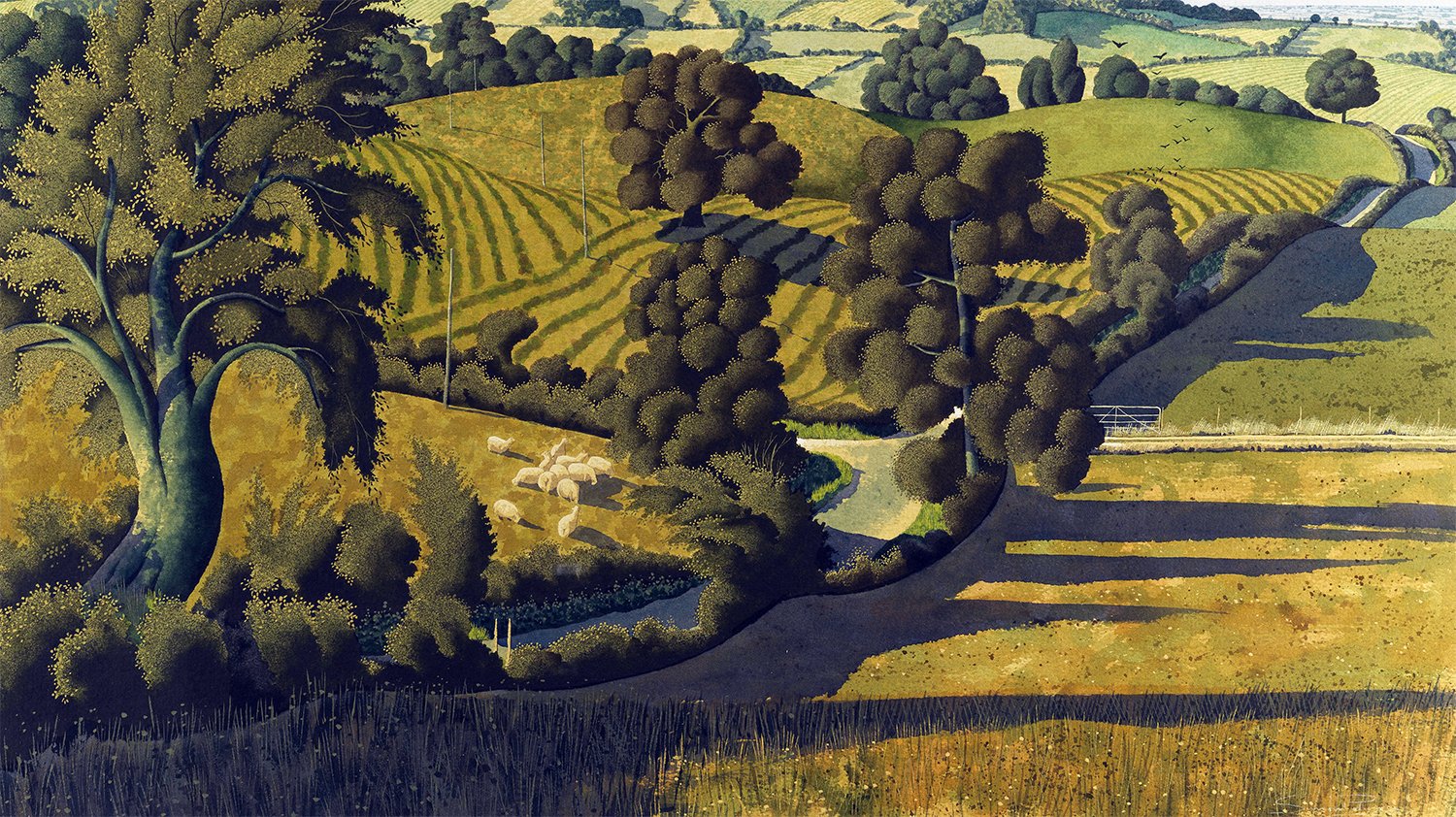
There are a number of specific values associated with the Sun. Firstly, the entire notion of living a good life or being a good man is a Solar one. It implies living in harmony with the natural world and others, and living in a way which is nourishing to both body and soul. In warrior societies, fighting hard with honour and martial prowess might be accorded a traditional virtue. In agricultural ones, being humble and capable of hard work might predominate.
Performing a role in the community – such as being a father, being a teacher, being a craftsman – might be understood as virtuously Solar, when one exists happily and completely in ones place. Under the Sun, “knowing ones place” can be a blessing: it can mean, being in a life which is matched to your skills, and which you are valued. The Sun also governs traditions which are harmful or controlling, and value systems which are rigid and unyielding: these are too-often depicted as “good” or “eternal” by those who benefit from them. In your own life, the Solar can represent the values you have been taught, be they benevolent or baneful.
So the magic of the Sun flows from becoming extremely within the rhythm of life, in a way which is effortless for you: a patient, but powerful road. Many of the lessons of the Solar call you to live within your limitations: be those the station of your birth, your physical capabilities, the norms of your society, or accepting those things you do not agree with as that which cannot be changed. And one must consider the Solar carefully, not to view it as inherently bad or boring. The Solar is your peace, your safety and nourishment. For not everything that is outside the walls is there unjustly, and one must be careful what one lets in.
Key texts
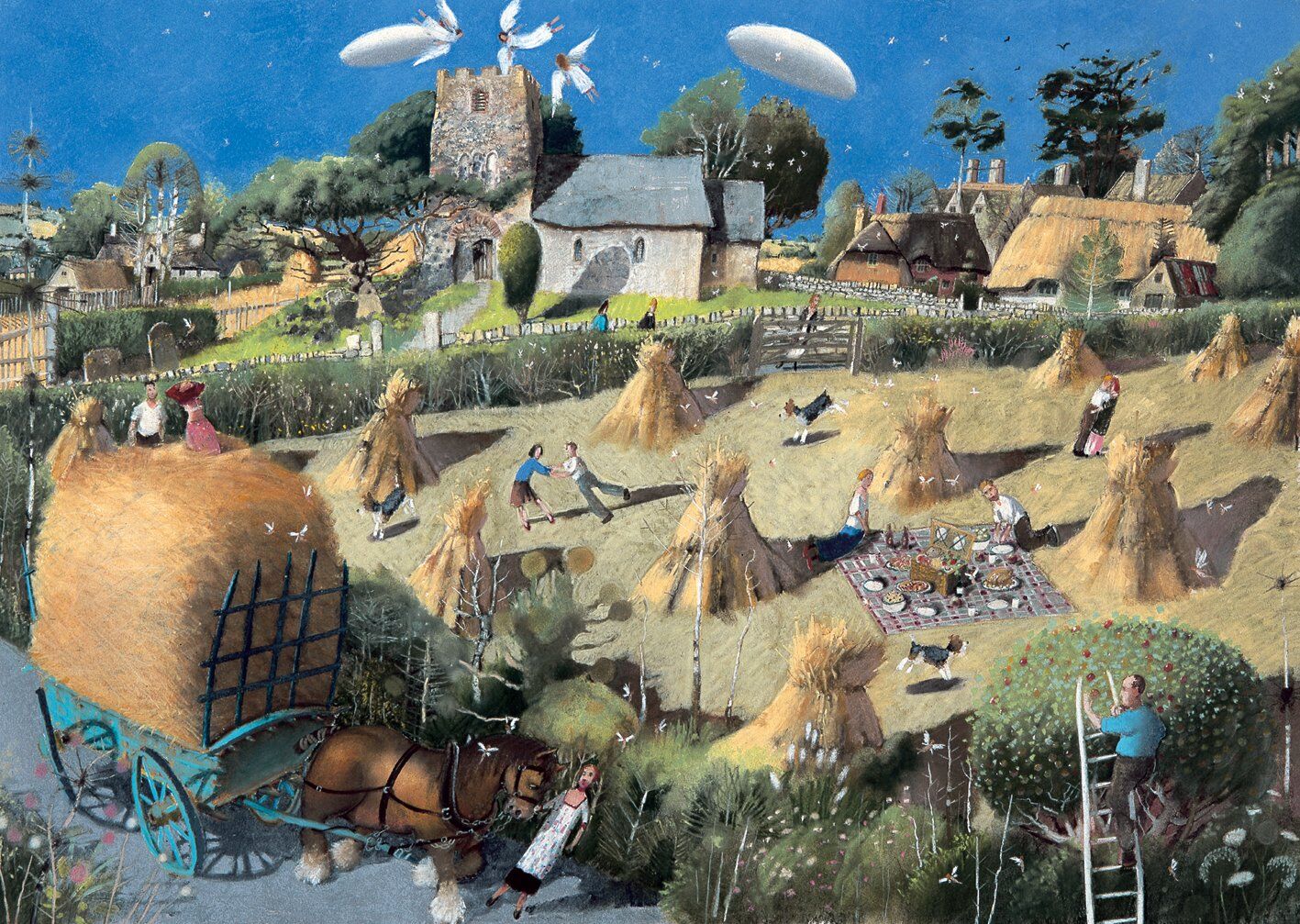
Real talk: no narratives are Solar. That would be dull! Many stories start with a Solar stasis which is disrupted.
The landscape of the Sun
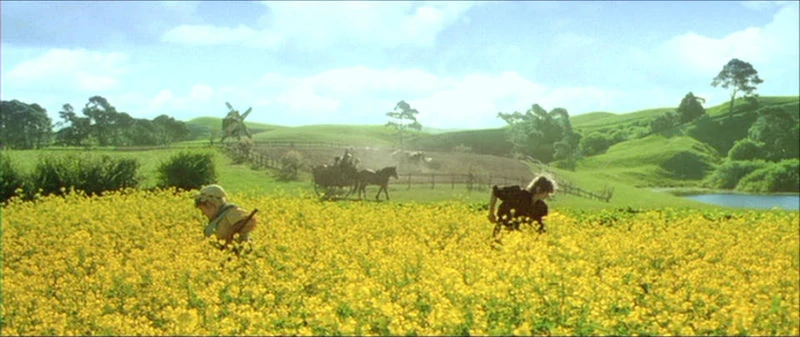
Agatha Christie adaptations are very Solar, with their little English worlds of butlers and vicars and local charity patronesses. But the most evocative Solar image is the Shire in the Fellowship of the Ring, or the general character of Samwise Gamgee, who is as iconically Solar as it is possible to get. The twee loveliness of Wind in the Willows is Solar - picnics with pals and mucking about with boats and making sure poor people stay in the Wildwood and out of your stately home, as it should be.
I find Avebury a very Solar place, not only for its stone circle, but also for its little pubs and old houses and the strangeness of its church. As my friend who worked for many years at Avebury says, it is a place of peace: a place where rival biker gangs can coexist, where I have seen grudge-enemies take the first step towards mending.
And of course, the Garden of Eden.
The Cycles of the Sun
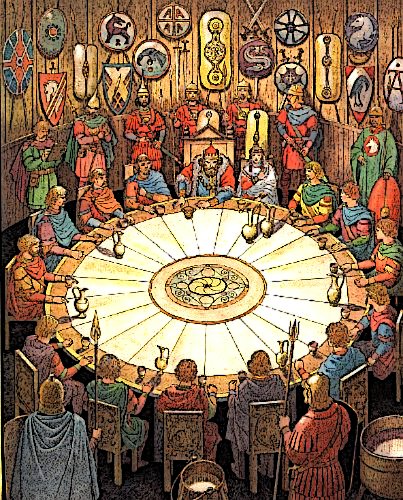
Excalibur is great. And extremely influential on me. The story of the rise and fall of king, set against the rising and falling of the sun and of the year. Its focus on human nature additionally makes this film almost exclusively a Solar one, the narrative surrounding human actions and institutions, and the dream of making them perfect.
The Solar governs the passage of time, and so any comparison of the cycles of man with the cycles of nature is Solar.
Duty and honour
Many, many things to choose from here, including Eastern tradition works like Hero (film) or 47 Ronin (traditional tale). In Lord of the Rings, both Rohan and the Army of the Dead are stories of old duty and old oaths being called in by the King, and you can observe similar social structures in Beowulf and so forth. Learning these social codes can be invaluable. In Solar stories, the good of the collective is valued over that of the individual.
The Horror of Where you Are
Nate correctly spots that it's pretty hard to find texts where the Solar IS the horror - but such stories are commonplace in our lives. Midsommar might be an example, as well as other folk horrors where the danger is not supernatural but from insular communities and dangerous new norms. He identifies True Detective: Season 1 as a Solar horror, where toxic masculinity, policing, cults and cosycruel Southern towns under the daylight are a source of strangeness and fear.
Or in non-supernatural fiction. I haven't and won't see I, Daniel Blake, but I suspect that's a good example. His House, my favourite modern horror film, (partially) answers my question "why are there not mpore millennial housing crisis haunted house films?". In this case, the protagonists are asylum seekers dumped in an inadequate halfway house and not even told where in Britain they are - and though spooky goings on seep through the walls and floorboards, the polite cruelty of their social workers makes it seem cosy by comparison. The horror of living within a society needs no cosmic Outside.
Solar vs…
In our lore, the Solar is almost always contrasted with a second Domain. In folk horrors like The VVitch and The Wicker Man, the Sun represents a certainty which slips away after encountering a Stellar wild. In Penda’s Fen, If, and even Monty Python, traditional Solar English institutions are undermined by the Lunar introduction of chaos and independent thought. It’s that tension which keeps all three Domain alive and vivid. Bilbo Baggins is an archetypal Solar person who gets lured away from his warm fire-side into faerie.
Go for a walk and then bake something
But frankly, even Titanic contrasts the certainty of man with the dispassion of the wild. Because Solar is right-action and being, then the best way to learn it is by doing Solar things – such as walking, crafting something, baking, volunteering, or spending time with friends in the pub. Similarly, as the Sun is virtue and goodness, one must be guided by lore from ones own tradition to discover and practice what their values ought to be.
Vashti Bunyan’s Just Another Diamond Day is a blissful cycle of songs written while travelling and living in the woods with her family. The lyrics of songs like “Diamond Day”, “Swallow Song” and “Where I Like To Stand” describe a peace that flows from nature’s rhythms.
And there’s a sunset brimming over the sky
And there’s a swallow teaching its young how to fly
Up on high
See how fast the summer passes by
And there’s an oak leaf turning green into brown
And there’s a pine so proud of her evergreen gown
Looking down
See how fast the winter comes around
And there’s a rain cloud passing over our heads
And there’s a cat on the doorstep waiting to be fed
Milk and bread
Day is done and now it’s time for bed
Summary
The physical
the natural world, the body, the material; things which live; food and agriculture; being in your body and the world; nature which is pastoral or benevolent; immanence, being; understanding human nature honestly, and forgiving it; living within ones limitations; everyday and commonplace
Beneficial to man
happiness, peace, stability, contentment, living a good life, nourishment, safety
Human values
goodness, morality, virtue, honour, duty, responsibility, correct behaviour, being a good person, humility, hard work; the values one has been taught
Human nature
Hubris, pride, greed; fallibility, capable of both mistakes and restitution; bodied, subject to age, illness and death; alienated from the natural world
Human society
institutions (royalty, the army, the family, state religion, school, government, law); established systems; lawful and well-ordered; permanent, protected, safe from things which are outside; stagnant, resistant to change
Tradition
permanence, the ancestors, tradition, cycles, right action, duty, being right with nature and your ancestors, passing things on, stagnation
Being part of something bigger
Community, working together, collectives, fellowship, the family/village/nation, public, communal, interrelationships; living in harmony with the natural world; being part of a society; having a place in the community; accepting your small part in a bigger picture; understanding oneself in the context of forefathers and decedents, or as part of a nation or community
Tensions
It is to be noted that Landcraft divides all life into Three, and then into Six things, and so each Domain contains its own contradictions within it.
Work
Being in your place, doing a good job at a hard day's work as the morally responsible thing to do for your soul and to contribute to the greater good vs doing truly satisfying work for only what you and others need, in a dignified way,
vs refusing work and living for joy and without care within the human world. Fantasies of work imposed by society or discovered through radical politics - fantasies and realities of how work was done in the past, and dreams for how it might be done in future.
Feudalism
The necessity of an ordered society under structured control, with god-given kings and tradition-handed-down from elders and patriarchys and the normalcy of policing and the military and national borders
vs the human resistance and refusal to such artificial things, the deep naturalness of living and community with all people as equals.
The human world
Safe, cosy, settled, protective from a dangerous Outside which is legitimately a threat
vs mundane, blinkered, overly rational, bogged down in the everyday
Man and the wild
Visions of humanity living in balance with the landscape and natural systems, the sun's harmony as our ability to live within a community of other beings
vs visions of humanity overburdening, exhausting, flattening and shutting out the natural world
Directions
Stepping out your front door, onto the road, and out of the gate in the wall. That’s the only direction from Solar. In general, the Solar is often perceived as the “startpoint” or “contrast point” for any other idea in the system.
Solar-and-Stellar
Combined with Stellar, it amplifies the natural world, being present, and experiencing the body, emotions, and connection to things around you – the immense sublime – at the risk of the loss of ones’ humanness.
Solar-and-Lunar
Towards the Lunar, we become more concerned with human society – how we can combine the best of tradition and change, morality and courage, to better things – but it can also amplify the sense of order and control, of being trapped within a prison of human design, away from what is instinctive and simple.
Lunar-and-Stellar
Its opposite is the Lunar-Stellar: both nature and magic at its most capricious, bewildering, frightening and hostile to man. This point represents a malevolent fairy wreaking havoc for sport; a mad scientist exploring that which man was not meant to know, unleashing unnatural forces; an autumn storm on the sea; and other such horrors. In short, it is everything the Solar is not, and which the Solar fears: chaos, loss of control, instability, the mastery of nature, unseemly and ungodly creatures, and knowing themselves to be small, vulnerable mammals, not special or protected in the slightest.